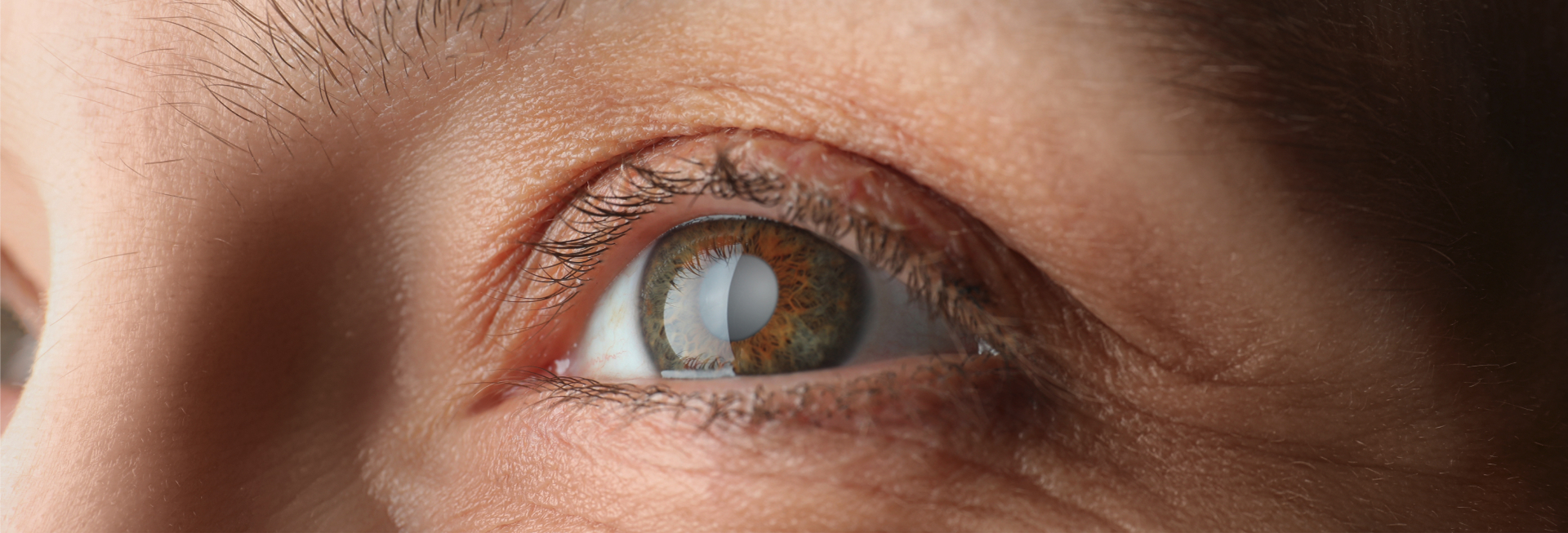
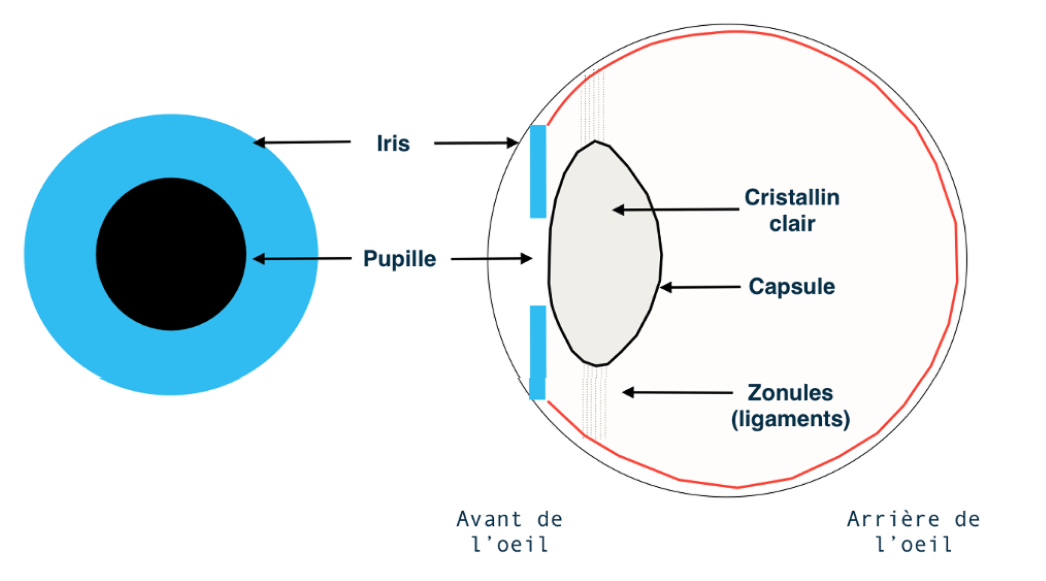
What is the lens?
The crystalline lens is the natural lens of gelatinous consistency located behind the iris and which allows light rays passing through the pupil to converge towards a point located at the level of the retina.
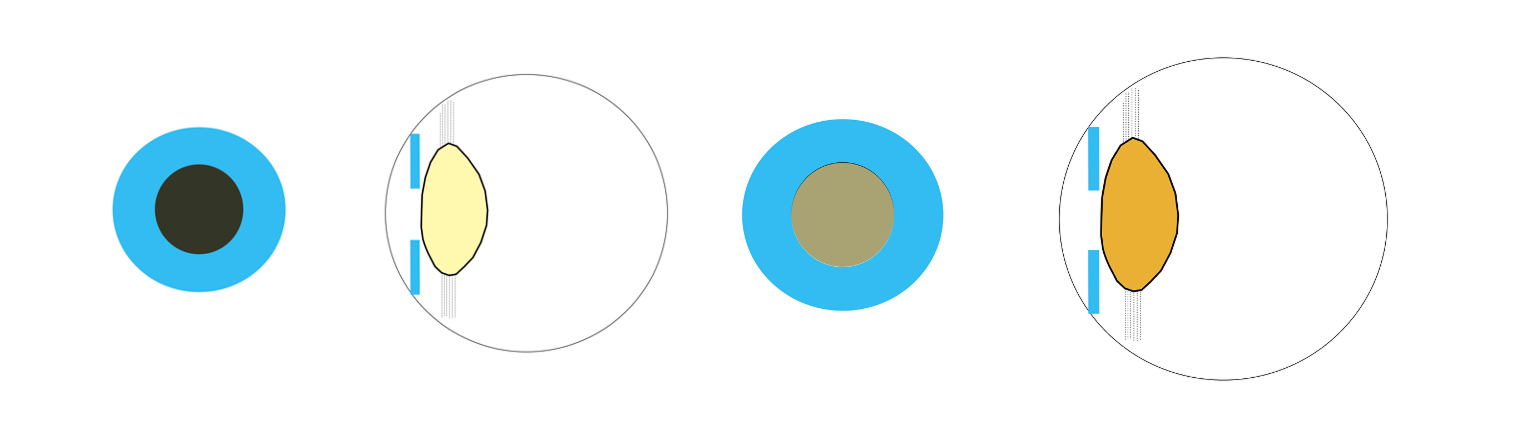
What is cataract?
Partial or total opacification of the lens, most often linked to age. According to the World Health Organization (WHO), it is responsible for nearly 50% of blindness cases worldwide. Switzerland offers widespread surgical access allowing effective restoration of vision.
Apart from age, what other factors are responsible for cataracts?
- Lifestyle habits such as tobacco and alcohol
- Diabetes and high blood sugar (glycemia)
- Ultraviolet, mainly caused by the sun
- Corticosteroids (inhaled as in asthma or COPD, injected into the joints or taken orally)
- Following eye surgery
- In case of intraocular trauma
- In case of inflammatory eye disease
- In case of inflammatory skin disease, such as eczema (atopic), psoriasis, etc.
- In case of treatment for cancer
- In case of genetic predisposition
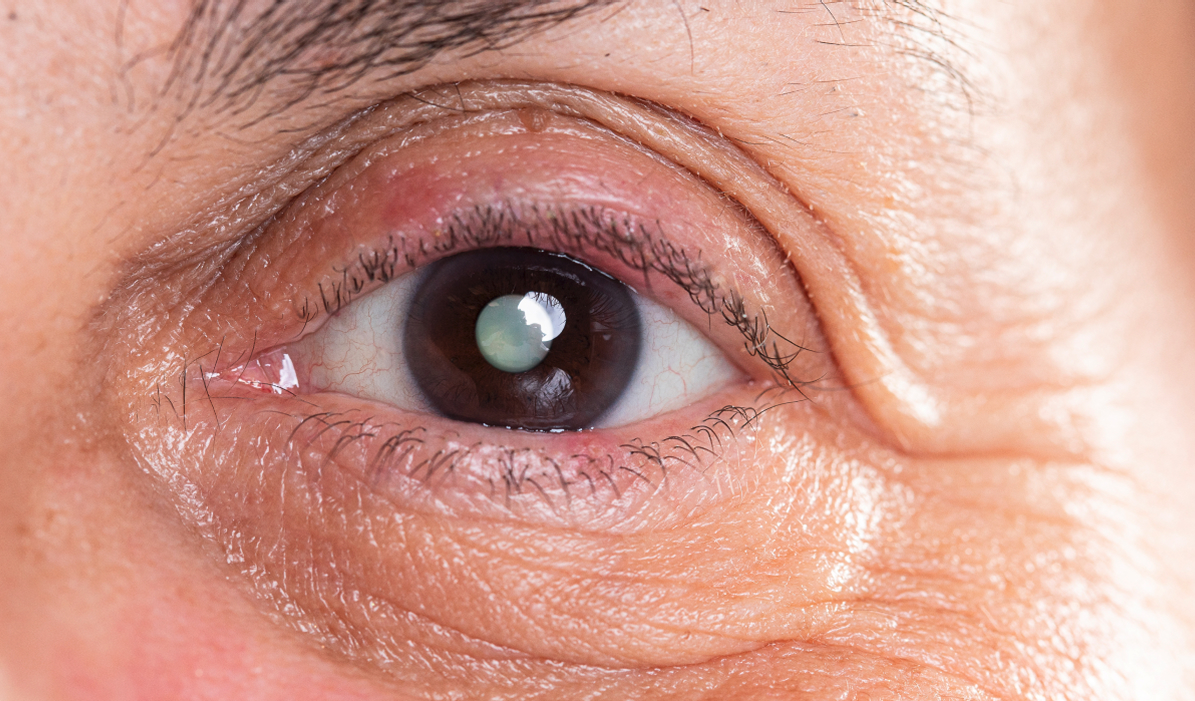
What are the symptoms of cataracts?
- Blurred or cloudy vision, as if you are looking through frosted glass
- Increased sensitivity to light, with more pronounced glare
- A deterioration in the perception of colors, which appear duller
- Difficulty seeing at night
- A frequent need to change glasses without noticeable improvement
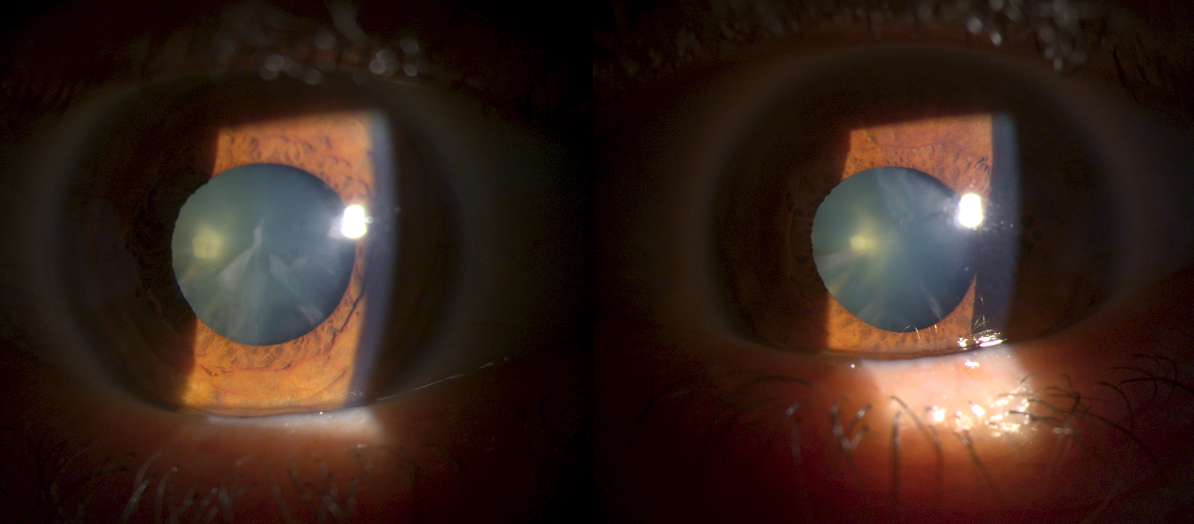
It is important to consult an ophthalmologist as soon as these symptoms appear to establish an accurate diagnosis.
How is cataract treated?
Surgery is the only effective treatment. It involves removing the opaque lens and implanting an artificial intraocular lens. It is the most performed operation in the world. It is generally recommended when visual acuity is less than 80% and/or it causes significant functional discomfort.
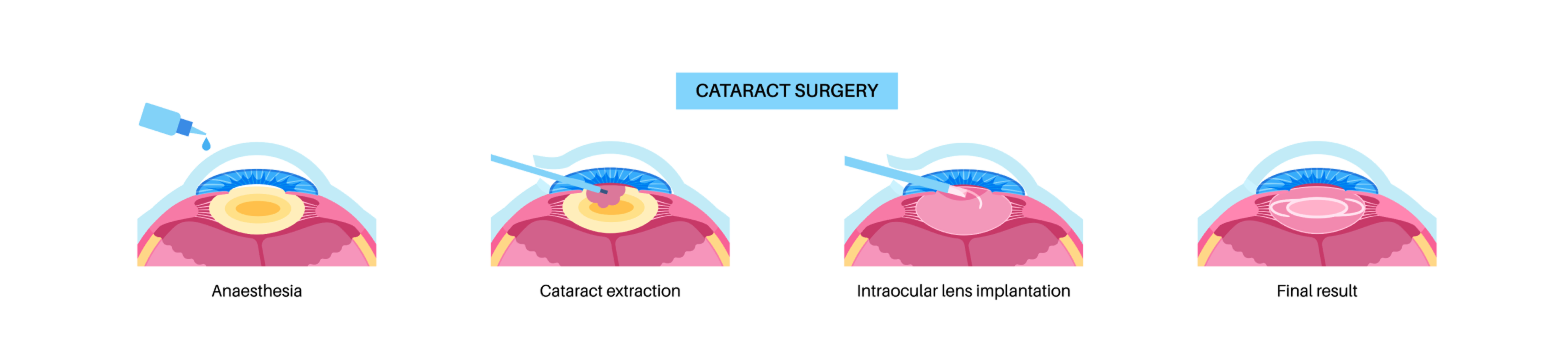
The procedure takes place under local anesthesia in the presence of an anesthesiologist, lasts on average 15 to 20 minutes, and both eyes are operated on separately for reasons of safety and optimization of refractive correction.
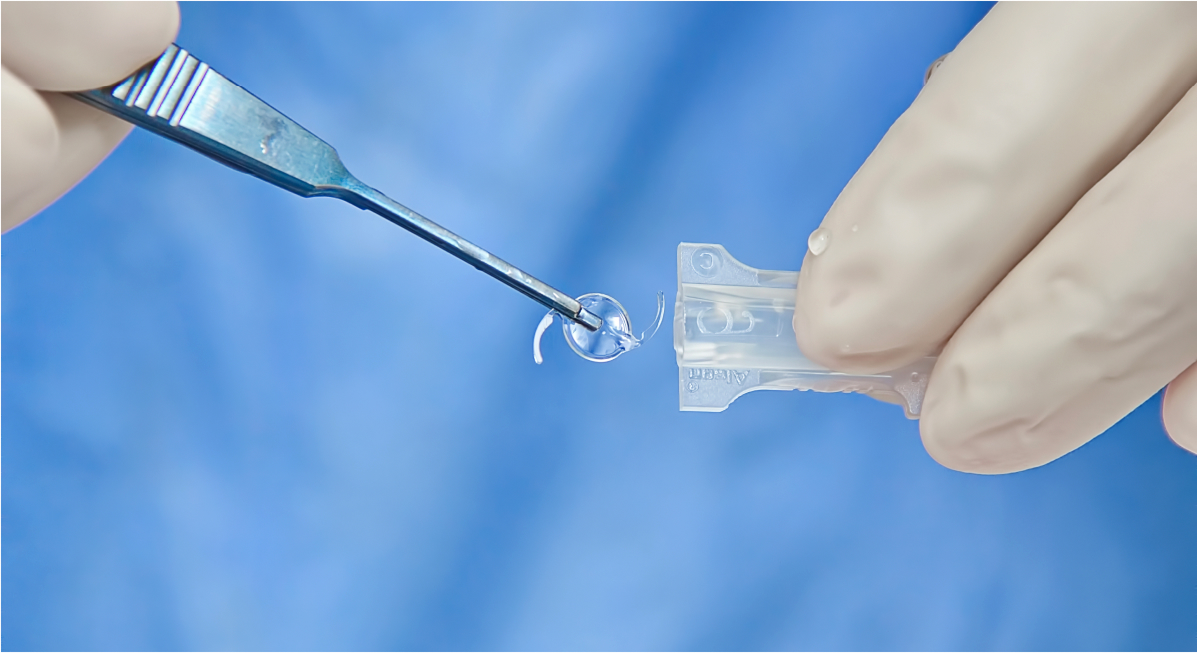
What types of implants are there?
Monofocal Lenses
Advantages: excellent quality of vision at a given distance (often distance vision), fewer halos and glare, less expensive.
Disadvantages: need to wear glasses for near or intermediate vision.
EDOF (Extended Depth of Focus) lenses
Advantages: clear distance to intermediate vision, less halos and glare than multifocals, better neurovisual tolerance.
Disadvantages: close vision often insufficient without glasses.
EDOF+ lenses
Advantages: extension of functional vision to reading, less compromise on visual quality than trifocals.
Disadvantages: moderate risk of halos or loss of contrast depending on the design.
Multifocal / Trifocal Lenses
Advantages: complete vision at all distances, significant reduction in dependence on glasses.
Disadvantages: risk of halos, glare, loss of contrast; less suitable for patients with pre-existing ocular pathologies.
Toric or non-toric?
When astigmatism exceeds 0.75 D, its correction becomes important. There are toric versions of all types of implants. Basic insurance only covers non-toric monofocal lenses; toric and premium options require a financial contribution from the patient.
How to do without glasses?
- Monovision: put the dominant eye at a distance and the dominant eye near
- Using an EDOF+ lens or mini-monovision with a standard EDOF
- Using a multifocal lens
Correction of astigmatism remains essential regardless of the strategy chosen.
Laser cataract surgery
Laser technology can assist 2 to 3 surgical stages but cannot perform the entire procedure. In most cases, laser assistance does not provide a significant benefit to refractive results or long-term implant positioning. Its usefulness is limited to specific cases requiring capsular pre-cutting or to minimize intraocular energy.